
Benchmark indices failed to hold on to early gains and closed in the red for the seventh straight session on Thursday, with participants remaining in wait-and-watch mode ahead of the RBI's interest rate decision. Unabated selling by foreign funds added to the pressure, though a modest recovery in the rupee cushioned the fall, traders said. After rallying in early trade, the 30-share BSE Sensex came under selling pressure in the afternoon session and closed 188.32 points or 0.33 per cent lower at 56,409.96.

The Indian equity market clocked record average daily turnover (ADTV) in both the cash and derivatives segments in February amid a spike in volatility. The ADTV for the cash segment for both the exchanges combined came at Rs 1.27 trillion, while the same for the derivatives or the futures and options (F&O) segment stood at Rs 483 trillion in the previous month. The volumes for both cash and derivatives have almost doubled from a year ago on the back of rising retail participation in the world's fourth largest equity market.

India Inc has reported a muted start to the financial year 2024-25, with a decline in net earnings and a modest single-digit uptick in revenues. An analysis of 488 companies that have released their results for the June 2024 quarter reveals a 1.6 per cent year-on-year (Y-o-Y) drop in combined net profit -- the weakest performance in the past seven quarters. In stark contrast, the combined net profit of these companies experienced a 13.6 per cent Y-o-Y increase in the previous quarter (Q4FY24) and a 65.2 per cent Y-o-Y rise in Q1FY24.

Equity benchmark Nifty scaled the psychological milestone of 21,000 in afternoon trade on Friday, and the Sensex touched its all-time intraday high of 69,888.33 after the central bank's decision to keep policy rates unchanged in line with market expectations. The 50-share benchmark index opened on a bullish note, after taking a breather on Thursday, and rose to 21,006.10. As many as 25 stocks were trading in the green, and 24 stocks defied the broader market and were trading in the negative territory.

Infrastructure, power, capital goods, PSU, healthcare, banking, oil and gas and metal stocks nosedived

Benchmark equity indices climbed nearly 1 per cent on Wednesday on buying in HDFC Bank and Reliance Industries. Investors are eyeing the two important events lined up ahead -- the interim budget and the US Fed interest rate decision -- to derive further cues from. Recovering all the early lost ground, the 30-share BSE Sensex jumped 612.21 points or 0.86 per cent to settle at 71,752.11.

Among the Sensex firms, Wipro jumped over 6 per cent, the most among the frontline companies. HCL Technologies, Tata Motors, Maruti, Tata Steel, Infosys, Tech Mahindra, Larsen & Toubro and JSW Steel were the other major winners. State Bank of India, Bajaj Finance, ICICI Bank, HDFC Bank, Axis Bank and IndusInd Bank were among the laggards.

Defence exports grew 33 per cent in the calendar year 2023 (CY23) to around Rs 21,083 crore while domestic defence orders serviced by listed companies were Rs 48,000 crore. The sector is poised for steady growth. Budgeted domestic capex is likely to hit Rs 3 trillion per annum, and exports could reach $6 billion by FY29.
From the Sensex pack, Bharti Airtel, State Bank of India, HDFC Bank, UltraTech Cement, Bajaj Finance, HDFC, NTPC, ITC, Reliance Industries, Tech Mahindra, ICICI Bank and Tata Consultancy Services were the major laggards. Tata Motors, Power Grid, Tata Steel, Hindustan Unilever, IndusInd Bank and Mahindra & Mahindra were among the winners from the 30-share pack.

Notwithstanding the recent sharp decline in the stocks of public sector companies, analysts at Jefferies remain bullish on this segment. State Bank of India, Coal India, and NTPC are their top picks in this space, they said in a recent note. The public sector undertaking (PSU) or state-owned enterprise (SOE) index, with a 70-percentage-point outperformance versus the National Stock Exchange Nifty50 over the past 12 months, comes after a decade of underperformance before 2020.

Positive cues from Asian peers also uplifted the sentiment.
From the Sensex pack, Mahindra & Mahindra climbed 3.71 per cent after the company reported an 18 per cent jump in its consolidated profit for the March quarter and the highest-ever annual profit of Rs 10,282 crore in FY23. Titan, Tata Steel, HDFC, UltraTech Cement, State Bank of India, ITC, IndusInd Bank, NTPC, HDFC Bank and Bajaj Finserv were the other major gainers. HCL Technologies, Power Grid, Maruti, Wipro, Tata Consultancy Services, ICICI Bank, Infosys, Tech Mahindra and Hindustan Unilever were the laggards.

BSE market breadth was positive. Around 1,821 stocks were on the advancing side, while 977 stocks declined out of 2,944 total traded stocks.
Among the Sensex stocks, Bajaj Finance, Bajaj Finserv, Sun Pharma, IndusInd Bank, Tata Motors, ICICI Bank, Tata Consultancy Services, Hindustan Unilever and Power Grid were the major gainers. NTPC, Axis Bank, Nestle, HCL Technologies and HDFC Bank were the major laggards.
Kotak Mahindra Bank was the biggest loser from the Sensex pack, skidding 1.83 per cent, followed by Axis Bank, NTPC, Hindustan Unilever, ICICI Bank, Bharti Airtel, Reliance Industries, HCL Technologies, IndusInd Bank and Nestle. In contrast, Bajaj Finance, Bajaj Finserv, Tech Mahindra, Tata Consultancy Services, Titan, Infosys, HDFC Bank, HDFC and ITC were the gainers.

Among the Sensex firms, Kotak Mahindra Bank, Asian Paints, Tata Consultancy Services, HCL Technologies, Infosys, Tata Steel, Wipro, Bajaj Finance, Tata Motors, Titan and Bajaj Finserv were the major laggards. In contrast, IndusInd Bank, ITC, Bharti Airtel, Maruti, UltraTech Cement, Mahindra & Mahindra and State Bank of India were the gainers.

The broader NSE Nifty dipped below the 10,200-mark to hit a low of 10,180.25 before ending at 10,195.15, down by 165 points, or 1.59 per cent.

Global trends, macroeconomic data, and the outcome of the US Fed policy meeting are the major factors that will drive the movement in the domestic equity markets this week, analysts said. "In the upcoming data-centric week, the focus will be on crucial releases, including inflation data from India and the US. "Indian inflation is expected to rise, while US inflation will remain steady.

The Karnataka election is being seen as the semi-final to the 2019 general elections and appears to be heading towards a close fight
Side indices raced ahead with BSE Midcap and BSE Smallcap advancing 0.4% and 0.3% up, respectively.
Market benchmarks Sensex and Nifty tumbled 1 per cent on Wednesday amid continuous foreign fund outflows and a weak trend in index majors Reliance Industries and HDFC Bank. The 30-share BSE Sensex slumped 636.75 points or 1.04 per cent to settle at 60,657.45. During the day, it declined 700.64 points or 1.14 per cent to 60,593.56.

The froth in the small and midcap (SMID) space is limited to a few pockets, but regulatory scrutiny could lead to sustained volatility, observe India's top-drawer wealth managers. They add that they have been advising clients to reduce their exposure to smallcaps. Anand Rathi Wealth, which manages investor wealth through mutual funds (MFs), reports that its exposure to smallcap stocks, both through MFs and directly, has decreased by nearly 7 percentage points in the past few months, now standing at 23 per cent.
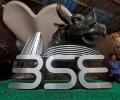
Broader market outperformed the frontline indices and also hit their respective all-time highs

Among the Sensex pack, Yes Bank, L&T, HDFC, RIL, HDFC Bank, PowerGrid and Coal India were the biggest losers -- falling up to 2.43 per cent.
Bajaj Finserv was the biggest gainer in the Sensex pack, rising 2.21 per cent, followed by Titan, ITC, Kotak Mahindra Bank, HDFC Bank, HDFC, Bajaj Finance, IndusInd Bank, ICICI Bank, HUL, Reliance Industries and Mahindra & Mahindra. Wipro, Tata Consultancy Services, Power Grid and Tech Mahindra were the laggards.

Among the Sensex firms, ITC, State Bank of India, Bajaj Finance, NTPC, Power Grid, ICICI Bank, Kotak Mahindra Bank and UltraTech Cement were the major laggards. IndusInd Bank, Tata Consultancy Services, Axis Bank, Mahindra & Mahindra, Tata Motors, HCL Technologies, Asian Paints, Wipro, HDFC and Maruti were among the major gainers.
From the Sensex pack, Bharti Airtel fell 3.42 and Kotak Mahindra Bank declined 3.31 per cent. ICICI Bank, ITC, HDFC Bank, UltraTech Cement, HCL Technologies and Maruti were the other major laggards. Tata Motors, Hindustan Unilever, Asian Paints, Sun Pharma, Nestle, Tata Consultancy Services, Wipro, Bajaj Finance, Axis Bank and IndusInd Bank were among the gainers.

The markets may be entering a consolidation phase and are expected to trade sideways for now after a good run in the last few weeks, suggest analysts. In this backdrop, they suggest investors can book profits at the current levels and enter the market again on a decline from a medium-to-long term perspective. Thus far in fiscal 2023-24 (FY24), the S&P BSE Sensex has moved up around 5 per cent to nearly 62,000 levels.

The S&P BSE Sensex ended up 28 points at 25,844 and the Nifty50 ended flat at 7,915.
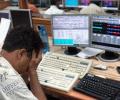
Bajaj Finserv was the biggest loser among the Sensex constituents, sliding 3.81 per cent, followed by Bajaj Finance, Tata Steel, Reliance Industries, HCL Tech, SBI, Larsen & Toubro and Mahindra & Mahindra, Axis Bank and Titan. On the other hand, Kotak Mahindra Bank, Infosys, Tech Mahindra, Power Grid, Asian Paints and Wipro were the gainers.

Economic growth, which we are taking for granted, slows for a completely different set of local or global factors and the Modi premium vanishes, observes Debashis Basu.

Rediff.com spoke to registered investment advisors to figure out how best the extra Rs 17,500 saved ever year can be invested to create a decent corpus in the years ahead. This is what they said.

The S&P BSE Midcap and the S&P BSE Smallcap indices slipped in red to shed over 1% each

Benchmark BSE Sensex and NSE Nifty closed marginally down in a volatile trade on Wednesday due to profit taking by investors after two straight days of gains amid mixed global trends and foreign fund outflows. The 30-share Sensex dipped 17.15 points or 0.03 per cent to settle at 60,910.28. During the day, it declined 213.66 points or 0.35 per cent to 60,713.77.

Benchmark BSE Sensex closed above the historic 66,000-mark for the first time while NSE Nifty hit a new all-time closing high driven by heavy buying in IT counters and fresh foreign fund inflows. Optimism in global equity markets also helped the local markets maintain their winning momentum for a second day. The 30-share BSE Sensex jumped 502.01 points or 0.77 per cent to settle at its new all-time closing high of 66,060.90.
Benchmark indices ended in the green on Tuesday after retail inflation dipped below the RBI's upper tolerance level of 6 per cent for the first time in 11 months in November. The 30-share BSE Sensex climbed 402.73 points or 0.65 per cent to settle at 62,533.30. During the day, it jumped 437.35 points or 0.70 per cent to 62,567.92. The broader NSE Nifty advanced 110.85 points or 0.60 per cent to end at 18,608.

VIX is meant to indicate investors' perception of the annual market volatility over the next 30 calendar days. The higher the value, the higher is the expected volatility and vice versa. VIX touched its historical peak of 85.13 on November 17, 2008, in the aftermath of the collapse of Lehman Brothers. In the past five years, it has stayed below 30.
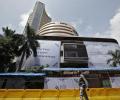
In the broader market, the S&P BSE Midcap added over 1% to finish at record closing high

Index heavyweights were the top losers along with bank shares.

Among the Sensex 30 stocks, new entrant Sesa Goa soared 22 per cent to Rs 187, while TCS rose 11 per cent to Rs 2,023.
